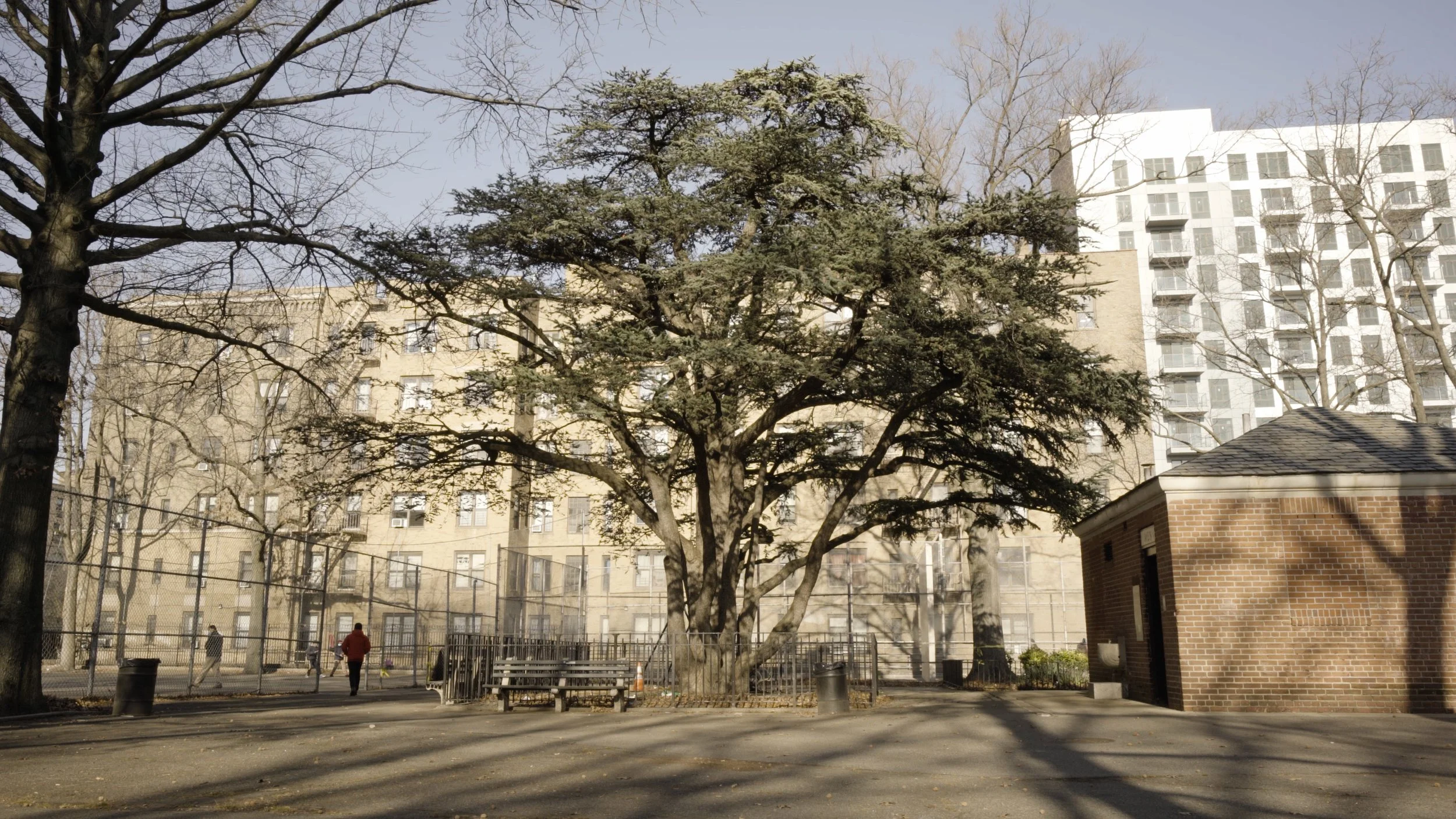
A branch chronicles stories of Lebanese cedar trees (Cedrus libani) planted outside of Lebanon, while contending with the human relationships surrounding these trees. The work engages a range of perceptions – centering the Lebanese cedar as an emblem for what it means to be Lebanese – and more broadly, what it means to be part of a diaspora. Through interviews with people in relationship with these arboreal subjects, A branch follows the nuanced ways humans and plants seek to root themselves in place, uncovering the pressures of assimilation and the shedding of traits or cultural practices during a time of surveillance, bombardment, and illegal deportation. The narrative displays several characters' attempts to maintain cultural sovereignty in foreign geographies, highlighting breaks and relinquishments of cultural practices and identities. A branch coagulates these human experiences with the ongoing environmental pressures that trees face, highlighting efforts of care, and adaptation amidst disruptions by the geopolitical forces of climate change and war. The project asks: what drives humans or trees to adapt and flourish in new surroundings, and what shades of pain, comfort, remembrance, and futurity emerge in this process? These questions speak to the interconnected struggle between humans and plants during the breakdown of climate, globalized economies and just governance.